


Self-Talk: The Way We Speak to Ourselves

Have you ever noticed the way you talk to yourself after something goes wrong? Maybe you make a mistake, forget something, or feel overwhelmed, then suddenly your mind jumps in with some notes like “Why would I say that?” or “I should be able to handle this.’ This internal conversation is called self-talk. We all have it, and it can play a big role in how we experience life.
Sometimes our self-talk or inner voice can be supportive and encouraging, while at other times it’s more critical. Other times it may be more neutral or non-judgemental. It can be impacted by how other people speak to and treat us, as well as personality traits like perfectionism.
The Inner Critic
Many people recognise a part of their negative self-talk as an inner critic. It might sound like:
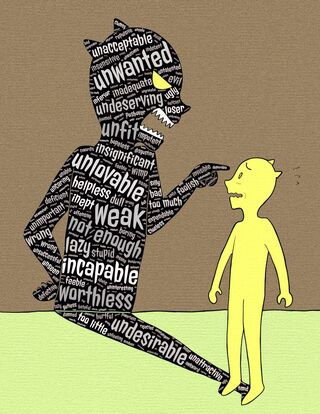
Although it feels harsh, this part of ourselves often develops to protect us, by pushing us to do better, avoid mistakes, or fit in with expectations. When our inner critic becomes loud or constant, it can leave us feeling anxious, ashamed, or not good enough.
Self-Talk and Emotions
The way we speak to ourselves can either intensify difficult emotions or help us move through them. The funny thing about emotions is that they are always trying to find friends, so tend to multiply and get stronger.
For example:
Critical self-talk:“I’m so bad at this.” May quickly lead to feelings of frustration or self-doubt.
Compassionate self-talk:“That didn’t go the way I hoped. It’s okay to find things difficult sometimes.” Allows for space for learning and self-understanding.
The goal isn’t to force positive thinking and “fake it ‘til you make it”. Instead, it’s about developing a kinder and more realistic internal voice over time. If that is hard, it is best to start with neutral statements, which are not good or bad and tend to be more factual.
How to Respond to Your Thoughts Neutrally
Dialectical Behaviour Therapy (DBT) encourages us to notice our thoughts rather than immediately believing them.
You might try:
Awareness/Notice the thought - “I’m failing at this.”
Respond with neutrality - “I am finding this challenging.”
Name the cause - “I’ve never done this task before, it makes sense that it’s hard.”
Many of us learned to be hard on ourselves over time, especially if we’ve experienced criticism or pressure to meet certain expectations. Practising compassionate self-talk is about gradually changing that relationship with ourselves.
That is why I have started Self-Talk Friday! I think going into the weekend with some gentle reminders and reflections would be a lovely way to start this process. Head to my instagram or facebook page to find out more


